

Maritime Operations
as a Career
Welcome!
This article is part of our series exploring different careers in marine and coastal fields. Each piece gives you ideas for building skills, getting experience, and discovering what’s possible—no single path, no required checklist. Just practical starting points to help you shape your own marine career.
If you’re an OSU student, your degree advisor is the best place to start a conversation about how this information fits with your academic plan. You can also connect with the Career Development Center or MACO for additional guidance, opportunities, and resources.
If you’re a student at another institution, reach out to your campus advisor to talk through how these ideas connect to your coursework and goals.
If you’re a prospective new OSU student, feel free to contact your OSU degree program, MACO, and the OSU Admissions Office—we’re happy to help you explore programs and opportunities.
What are Maritime Operations?
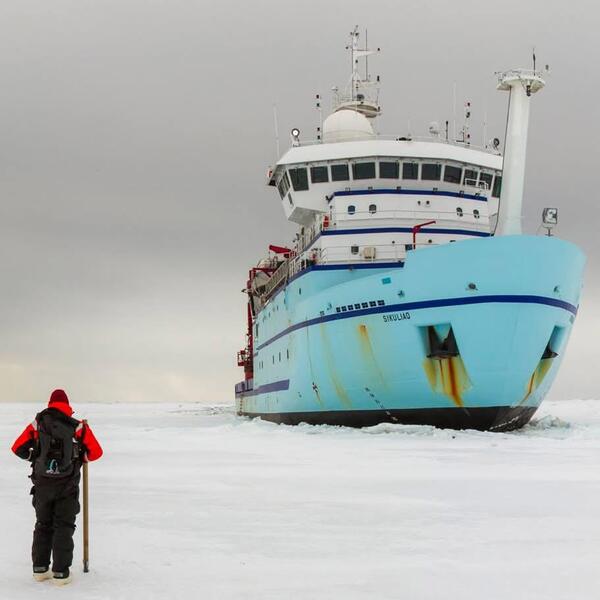
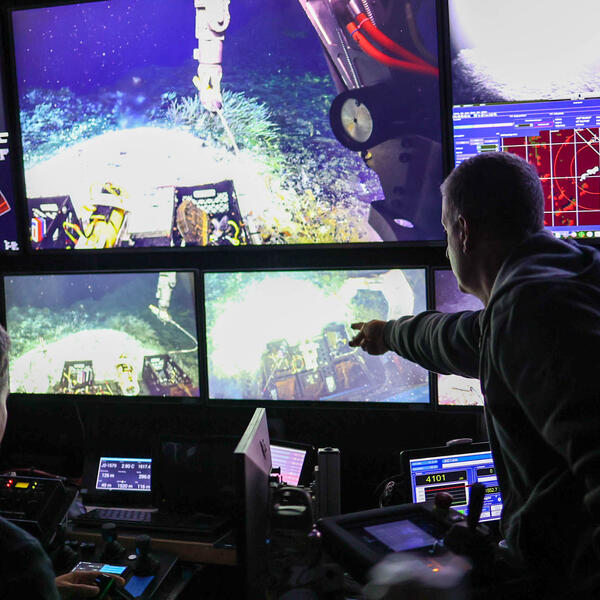
From research to sonar operations to tourism, maritime operations are careers that involve working on the water aboard vessels and operating the vessel or other technical equipment. This field has been around since people started sailing across the globe, and has evolved since then to be an interdisciplinary discipline that people from many different backgrounds all across the world can be involved with. On the Pacific Coast, maritime operations are highly involved in research, granting ocean-going researchers access to research cruises and providing at-sea laboratories focusing on marine mammal behavior and phytoplankton ecology to oceanographic arrays.
Interviews
Check out these interviews with industry professionals and recent graduates! Learn how they got where they are now, the opportunities they utilized, and their advice for current and prospective students!
Undergraduate studies at OSU
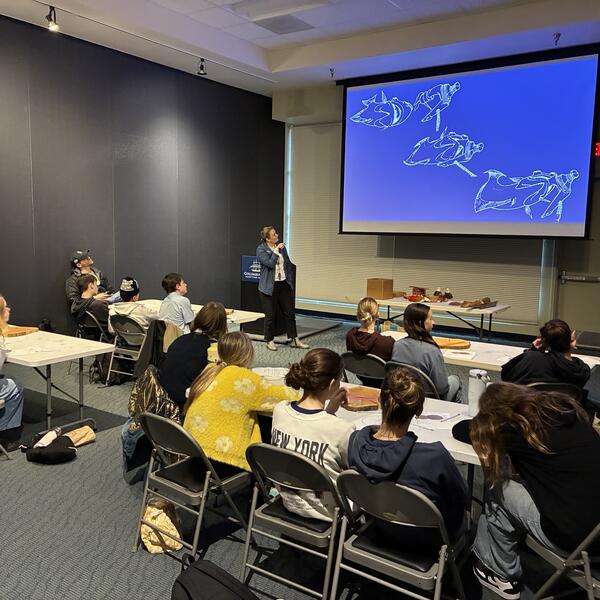
OSU does not have a specific degree or concentration in Maritime Operations. Please work with your major advisor on a holistic approach that addresses at sea-focused experiences through coursework, fieldwork, internships, research experiences, certifications, and other experiential learning opportunities
Applicable undergrad degrees at OSU
-
Biology (Marine Biology and Ecology option)
-
BioResources Research (Water Resources option)
-
Climate Science
-
Electrical and Computer Engineering
-
Environmental Sciences
-
Fisheries, Wildlife, and Conservation Sciences
-
Geography and Geospatial Science
-
Geology
-
Industrial Engineering
-
Marine Studies
-
Mechanical Engineering (Robotic Control option)
-
Oceanography
-
Supply Chain and Logistics Management
-
Tourism, Recreation, and Adventure Leadership
-
and more...
Contact MACO and/or your academic advisor for more information.
- Computer Science
- Earth Sciences
- Environmental Science
-
Fisheries and Wildlife Sciences
-
Geology
-
Industrial Engineering
-
Marine Biology
-
Marine Conservation and Management
-
Marine Studies
-
Microbiology
-
Naval Science – U.S .Marine Corps
-
Naval Science – U.S. Navy
-
Oceanography
-
Ocean Technology
-
Sustainability
-
Tourism, Recreation, and Adventure Leadership
Contact MACO and/or your advisor for more information.
Applicable courses at OSU
Find courses at the coast on our coastal course roster and others on the Schedule of Classes.
-
BI 111: Introduction to Marine Life in the Sea: Marine Habitats
-
CCE 201: Civil and Engineering Graphics and Design
-
CE 202: Civil Engineering: Geospatial Information and GIS
-
FW 113: Introduction to Marine Life in the Sea-Marine Birds and Mammals
-
GEOG 201: Foundations of Geospatial Science and GIS
-
MAST 201: Humans and the Ocean
-
OC 101: The Blue Planet: The World’s Oceans
-
OC 201: Oceanography
-
OC 203: Ocean, Coasts & People
-
PAC 242: SCUBA: Open Water
-
PAC 243: SCUBA: Advanced Open Water
-
PAC 244: SCUBA: Rescue Diver
Please note: If you do not see these courses in the Schedule of Classes, offerings may be intermittent. Please contact MACO for more information. Work with your major advisor to see which courses apply to your degree and could give you relevant experience and transferable skills at sea.
Find courses at the coast on our coastal course roster and others on the Schedule of Classes.
- BI 373: Field Methods in Marine Ecology
- BI 427: Paleobiology
- CE 311: Fluid Mechanics
- CE 412: Hydrology
- CE 439/539 (OC 436/536): Acoustical Oceanography
- CHE 311: Thermodynamics
- ENSC 301: Environmental and Ecological Data Analysis
- FW 324: Food from the Sea
- FW 430/530: Introduction to Scientific Diving
- GEOG 380: Remote Sensing: Principles and Applications
- HST 314: Maritime Histories of the Pacific
- ME 330: Intro to Fluid Mechanics and Heat Transfer
- OC 332: Coastal Oceanography
- OC 295 and 296: Introduction to Field Oceanography
- OC 396: Coastal Oceanography Field Methods
- OC 490: Ocean Instrumentation, Sensors, and Platforms
- PAC 325: Wilderness First Aid
- PAC 329: Wilderness First Responder
Please note: If you do not see these courses in the Schedule of Classes, offerings may be intermittent. Please contact MACO for more information. In addition, most of these upper-division courses are major-specific or have prerequisites. Work with your major advisor to identify which courses apply to your degree and provide relevant experience and transferable skills at sea.
Getting involved with sea-going vessels may involve much more than learning the technical aspects of how ships work and the best ways to traverse the ocean. You can also gain experience with working on ships through other areas of study, such as policy, communications, tourism, business, and healthcare. Courses in marine economics, coastal and ocean law, marketing and entrepreneurship, etc., are also important.
Experiential Learning
Although students may not have had any field experience aboard ship, there are skills that employers often value even more highly. These skills are often learned gradually over time- rather than being taught-and can be applied to a wide variety of jobs.
-
Time and project management - Working on a ship often involves working on a schedule; being able to manage tasks and responsibilities efficiently becomes essential. Proficiency in this skill can be demonstrated by how you are able to balance classes, clubs, work, and other extracurricular activities.
-
Critical thinking - Solving problems as they arise (or proactively preventing them) is key out on the open ocean because help may take a while to reach you. While you may not have experience in specific scenarios, being able to keep calm and problem-solve in high-stress conditions is often demonstrated when taking exams or in customer service jobs.
-
Adaptability and flexibility – People involved in maritime operations naturally work with the ever-changing conditions of the ocean. Therefore, maritime operations often require workers whose strengths lie in being able to adapt to these changing conditions. In college, these skills are often developed through group work and adapting to the needs of peers to achieve a desired outcome.
-
Situational Awareness- Working at sea means working in dynamic and variable conditions. Perceiving, anticipating, and understanding these will allow you to avoid potentially dangerous conditions and avoid them. In college, you can learn and demonstrate these skills through field work, and before college, this is often learned in sports or other extracurricular activities.
-
and many more. Think about what skills you bring to the table to showcase who you are as a worker. Check out the Career Development Center for more.
While all skills are teachable, having previous experience in these fields (and explaining that experience!) can set you apart from other applicants.
-
First Aid/First Responder
-
Sea-going experience
-
Small vessel operation
-
Operating heavy machinery
-
Navigational skills
-
Oceanographic equipment deployment
-
Inspecting maritime and oceanographic research equipment
-
Wilderness First Aid
Public Agencies
Oregon State University Facilities
- A wide variety of labs at OSU have seasonal field work, which involves data collection that must be done aboard a vessel.
These facilities/programs are not run by MACO. Visit their websites for the most up-to-date information.
-
Bollinger Shipyards Internship (multiple)
-
International Association of Maritime and Port Executives (multiple)
- and many more, check out Handshake-- OSU's university-job board that lists on- and off-campus jobs and internships
These programs are not run by MACO. Visit their websites for the most up-to-date information.
Further Education
The OSU Small Boat Program provides students and faculty with the resources and training they need to safely operate small boats, both motorized and paddle boats. Priority is given to students who express a current need for the certifications, but all OSU community members are welcome to participate as space allows. In addition, they have a small fleet of boats available for current boaters to use on research excursions.
The Coastal and Ocean Engineering Graduate Program at OSU emphasizes the interdisciplinary nature of research and education on emerging themes related to coastal climate change, including sea level rise and coastal storms, natural coastal hazards including tsunamis and hurricanes, marine renewable energy, and coastal ecology and sustainable communities. It seeks to enable students to pursue research topics that cross the traditional boundaries of coastal engineering and to prepare students for leadership positions in academia, private, and public sectors.
The College of Earth, Ocean, and Atmospheric Sciences graduate program offers M.S. and Ph.D. degrees in oceanography. Oceanography, the application of the sciences to the study of the oceans, is an interdisciplinary environmental science concerned with all processes: biological, chemical, geological, and physical.
The Marine Resource Management (MRM) graduate program at Oregon State University starts with coursework within the College of Earth, Ocean, and Atmospheric Sciences, but can go almost anywhere! It offers six flexible areas of study, including emerging solutions & technologies, to prepare students for future careers at the interface of science and society — within government, nonprofits, academia, industry, or consulting.
Micro credentials (Marine Technological Society) - MTS issues a diverse range of stackable micro credentials. Micro credentials are designed to be "stacked" in a variety of combinations, like interlocking blocks, to progress toward the competencies necessary for learners to attain their specific certifications or employment objectives. These micro credentials specifically address the skills essential for employment within the blue economy.
STCW Courses & Training Programs - USCG Approved - The Standards of Training, Certification and Watchkeeping for Seafarers (STCW), which the International Maritime Organization (IMO) established in 1978, designates a set of minimal international training standards for professional mariners. The intention of STCW training programs is to promote the safety of life and property at sea, as well as ensure protective measures for the marine environment. The STCW Basic Training course provides instruction and practical training in relevant safety skills necessary to work onboard a vessel in a variety of different roles with designated duties.
Please note that the STCW trainings are helpful in deck positions of the maritime operations field, but are less applicable in many other areas.
The National Marine Electronics Association (NMEA) has established an extensive training program for new and veteran marine electronics installers. NMEA Training events occur regionally around the USA and Canada and are also offered virtually on a bi-monthly basis for the global marine electronics industry.
Sea Education Association (SEA) is a global teaching, learning, and research community dedicated to the exploration, understanding, and stewardship of marine and maritime environments. SEA empowers students with life-changing sea voyages of scientific and cultural discovery, academic rigor, and personal growth. This is a study abroad program run through Woods Hole, MA. Visit OSU GO for information specific to OSU students.
Marine Maintenance Technology (MT) Program at Skagit Valley College in Washington prepares students for employment in the marine trades with a focus on two major disciplines: marine mechanics and marine electrical systems. The MT program offers one-year certificates in each of these high-demand areas and a two-year Associate of Applied Science (AAS) degree for those who complete coursework in both fields.
Through OSU Recreational Sports, students can register for SOLO Wilderness first aid and/or first responder certifications. Master wilderness emergency care with the Adventure Leadership Institute’s Wilderness Medicine Certification Classes. Whether you’re an outdoor enthusiast, a professional guide or a medical responder, these courses provide essential skills for handling emergencies in remote and challenging environments.
Scholarships
-
Society for Naval Architects and Marine Engineers Scholarships
-
Student Training Award – Scientific Boating Safety Association
-
ORAFS Student Scholarship – Oregon Chapter of the American Fisheries Society
-
OSU ScholarDollarsis Oregon State University’s scholarship search and application system, which is hosted by Scholarship Universe. OSU students may use OSU Scholar Dollars to submit applications for donor-funded scholarships available.
These programs are not run by MACO, visit the program websites for more information
Photo courtesy of Small Boat Program
This project is not intended to dictate a single path or list of requirements. Instead, it serves as a reference and starting point to supplement formal academic advising by illustrating what’s possible and helping students chart their own “marine pathway”. Contact your advisor to get started and/or contact the Career Development Center and MACO for supplemental materials.